


Heritage

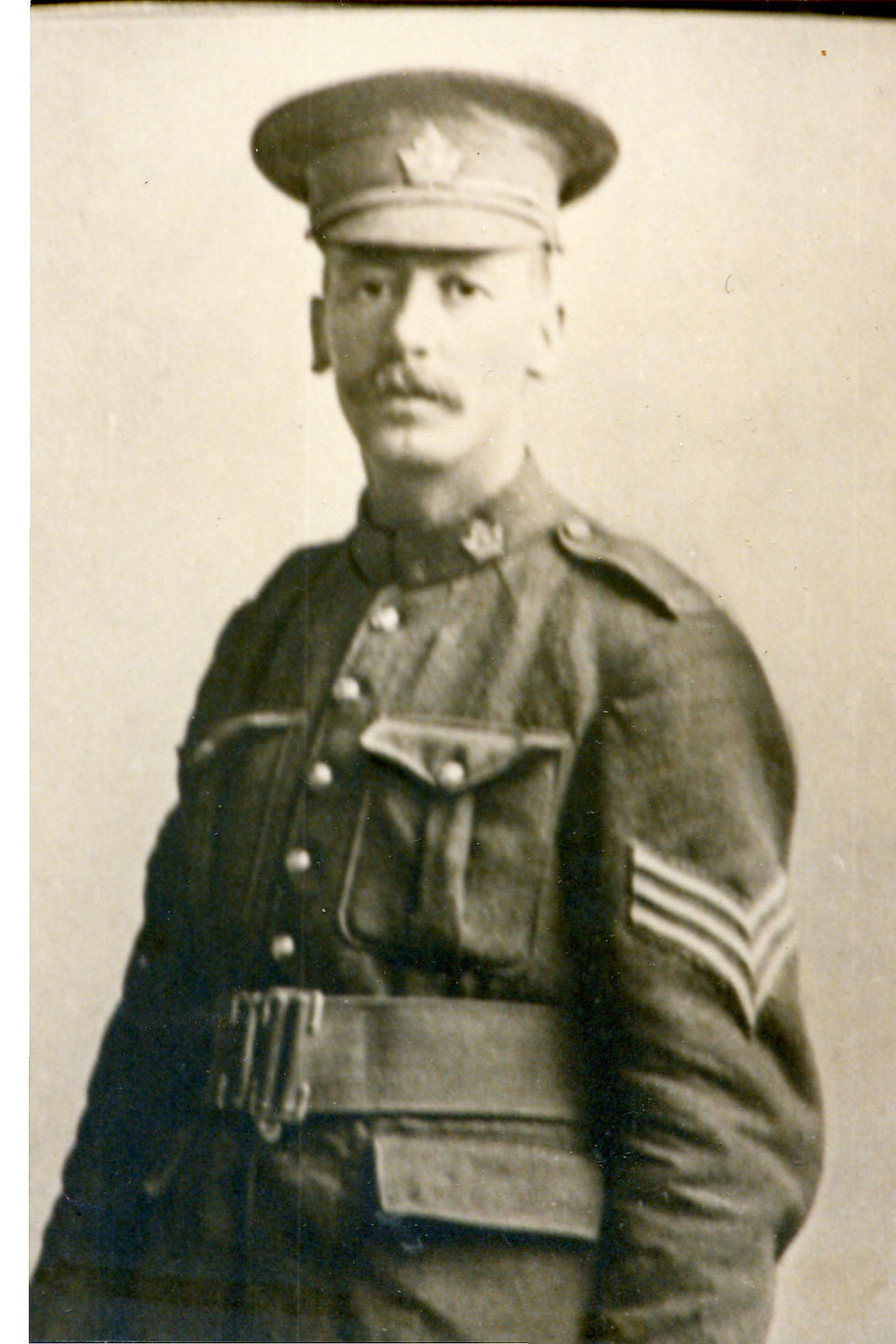
Pte William Jones, 28th Battalion, Regina.
This past month I got a really interesting message through my account with Ancestry. It was from a research assistant in the Casualty Identification Program with the Canadian Department of National Defense. Long story short, they are working on a file for a man who could very well be my maternal great-great-grandfather, who was killed in action during World War 1, at the Battle of Vimy Ridge. The information they have matches up with the information I have, all they need now is a living relative who is willing and able to provide their DNA for testing. (Side note: Unfortunately I am not eligible, because they need information that is passed from father to child to make the match. However I have reached out to some relatives that may be able to assist the team in their efforts to successfully identify the remains of this man.) I think it would be a wonderful thing to be a part of giving a soldier back his name and filing in a part of my family's story.
I actually started my family tree research in response to the death of my mother. I wanted to feel closer to her, so I began tracing our heritage. I have learned a few things about where my family comes from, on both sides, and I have found personal connections with historical events, like this soldier from WW1. Although it is unlikely to create any significant change in my physical circumstances, knowing that this man could be a part of my family tree establishes a connection to the past that I have not otherwise experienced. It creates a desire to know more, and lends a depth to historical events that have shaped the world I know. I look forward to digging in more to the personal stories of all of these people who have in some way contributed to the person I am now, and the people my children are growing into. There is value in tracing your roots and seeing all the ways that one little shift could change the whole story for generations of people, for better or for worse.
I get the same feeling when I study the Scriptures. When I learn some new information about the cultural customs or the context of a passage, it changes the way I understand my faith. Knowing that shepherds would put oil on the heads of their sheep to keep bugs and parasites from burrowing into the ears and eyes, deepens the meaning of Psalm 23's verse about God anointing my head with oil. Understanding that the lambs raised for sacrifice in the hills around Bethlehem were often wrapped and placed in a manger to protect them from injury and predators, makes the imagery of Jesus being swaddled and laid in a manger all the more powerful. Learning that the words to the believers recorded in Hebrews 4:12-16 (written 70 years before the most informal New Testament was compiled and approximately 300+ years before the Bible we think of today as the "Word of God") were actually referring to Jesus, reminds me that He is alive and active in this world, even now.
These are things that have made my relationship with God and my faith stronger, but these are not things I would have known if I had not been looking back to trace the history of my faith, to understand my Christian DNA as it were. Just as I want my kids to have a record of where their family has come from, I want them to be able to see all the ways God has been faithful through generations of people and how it has lead us to be here where we are now. I want them to be able to grasp the thread of God's redemptive work throughout history, both personally and globally.
But I cannot teach them this if I do not know it myself. I cannot give them what I do not have. Just as we learn much of our earthly family's history through our parents and grandparents, we learn about our spiritual heritage from the faithful who have come before us. As a result we have all inherited understanding of Scripture, traditions, beliefs, methods of study and expressions of worship. The problem comes when the ones we learned from do not know their own history well. Just as our earthly histories can be altered as a result of family rifts or the destruction of precious heirlooms, things in our spiritual lineage can be lost to tragedy, or misinterpreted by those ignorant of the context. There are even some pretty contentious disagreements that have split church families from root to branch. But when we choose to go back, dig deeply into our spiritual heritage, and find those connections to what came before, we can better understand why we are where we are.
Then we must choose where we will go from there.


Comments